Marvell to buy Lumentum in $115 billion deal for AI data centers
Marvell agreed to buy optics maker Lumentum in an all-stock deal with a $115 billion implied enterprise value, betting AI data centers will shift to light.
Share

Marvell Technology agreed to buy Lumentum, a maker of lasers and optical parts for data centers, in an all-stock deal that the companies said gives Lumentum an implied enterprise value of $115 billion. The chipmaker is betting that the next phase of artificial intelligence (AI) spending will go to the links between chips, and that those links will increasingly run on light.
Under the agreement, Lumentum stockholders will receive a fixed 4.500 shares of Marvell common stock for each Lumentum share they own, according to Marvell’s release and its Form 8-K filed with the Securities and Exchange Commission (SEC). The release puts that at about $1,132 per Lumentum share, a premium of about 23.9% based on both companies’ unaffected closing prices on Oct. 28, which the companies called the last trading day before market speculation about a deal began. Marvell stockholders would own about 67% of the combined company and Lumentum stockholders about 33%, on a fully diluted basis. The merger agreement was signed Nov. 1, the 8-K shows.
What’s driving it
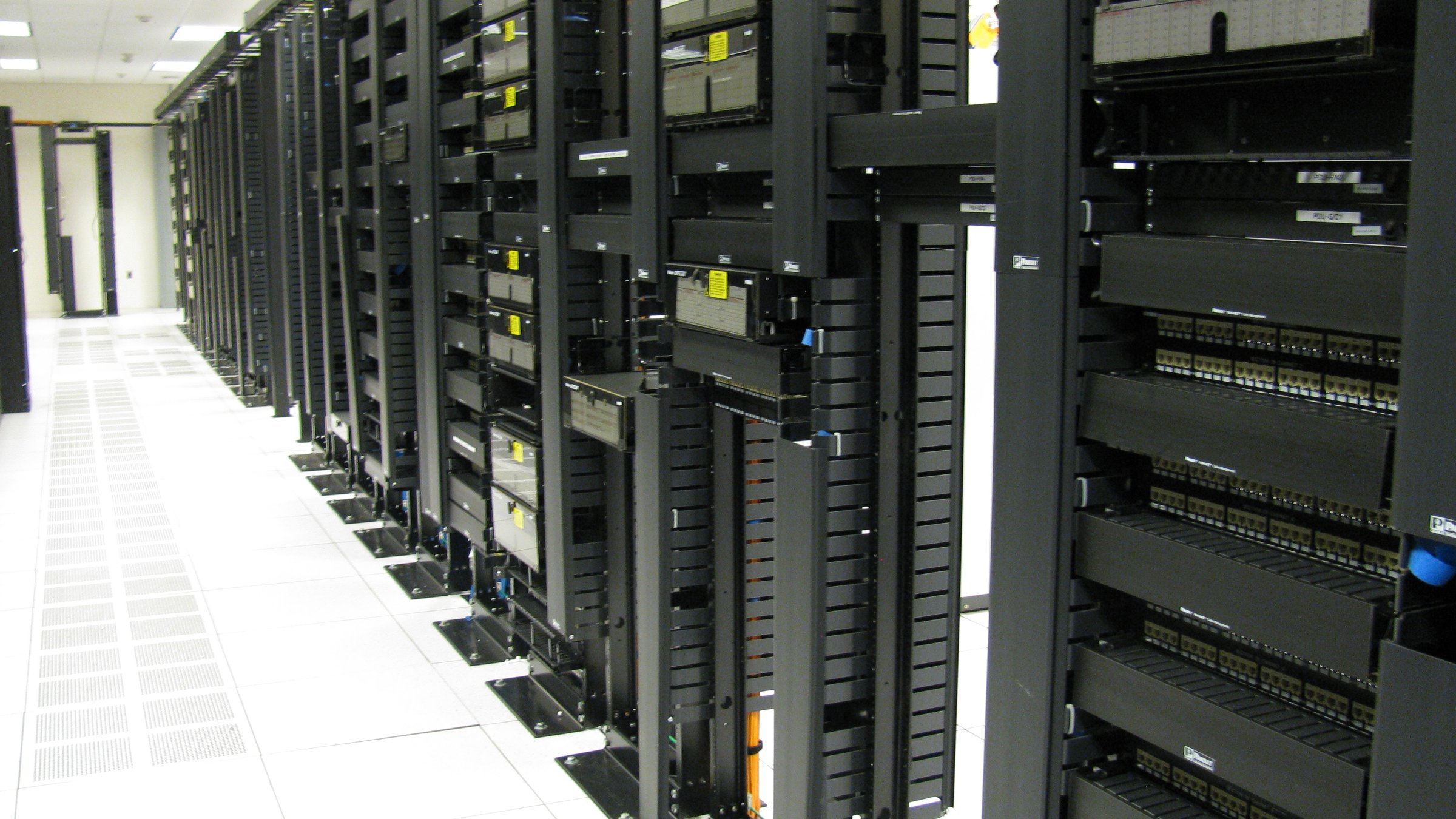
Inside an AI data center, thousands of processors have to trade data constantly. Most short links today still run over copper wire, which is cheap and reliable over a meter or two. But as data rates climb, electrical signals in copper lose strength faster over distance and burn more power to push through. Light carried over fiber can move far more data over longer distances with less loss.
Marvell’s release makes that case directly: “rapidly growing bandwidth requirements and the physical limitations of copper-based connectivity are accelerating the transition toward optical technologies.” Today, the light usually comes from pluggable optical transceivers, small modules that turn electrical signals into light at the edge of a switch or server. The company’s investor deck sketches the next step, which it labels “Optical tomorrow”: co-packaged optics (CPO), where the optical parts sit in the same package as the chip, cutting the electrical distance to almost nothing.
That is why a chip designer wants a laser maker. Marvell brings electrical and optical interconnect chips, network switches and custom AI processors. Lumentum brings high-performance lasers, optical transceivers, optical circuit switching (OCS) and, the release says, compound semiconductor manufacturing, including indium phosphide (InP), the material many data center lasers are built on.
“AI infrastructure is undergoing a fundamental architectural shift toward optical connectivity, creating an opportunity that comes along once in a generation,” Matt Murphy, Marvell’s chairman and chief executive, said in the release.
Our read
The AI build-out’s bottleneck is moving. For three years the story was compute: who could get enough graphics processors. Now the harder problem is connecting them, inside a rack, across a building and between buildings, without the power bill exploding. Marvell is paying a large price in its own stock to own a piece of that problem outright, including the lasers and the specialized fabs that make them. That is as much a supply bet as a technology bet. Lasers built on indium phosphide are hard to make in volume, and the release says the deal is meant to “strengthen strategic supply.” Owning the factories could matter more than any single chip design if demand for optics keeps outrunning capacity.
The numbers deserve some care. The $115 billion is an enterprise value for Lumentum, not a cash price, and because the deal is paid in a fixed number of Marvell shares, what Lumentum holders actually get will move with Marvell’s stock until closing. The $550 billion market figure and the more than $1 billion in yearly cost savings are the companies’ own projections. The bigger risk is time. Marvell does not expect to close until the first half of 2028, and the 8-K builds in deadline extensions running to August 2028 if regulators are slow. That is a long time for a fast-moving market to change shape.
Who has a stake
Lumentum stockholders must vote to adopt the deal, and Marvell stockholders must approve issuing the new shares and raising the number of shares Marvell is authorized to issue, the 8-K says. Both boards approved the agreement unanimously, according to the release. Murphy would remain chairman and CEO of the combined company. Three Lumentum directors, including Lumentum President and CEO Michael Hurlston, would join Marvell’s board, which currently has seven directors.
“Surging AI data traffic requires rapid hardware innovation, and this combination enhances our ability to deliver next-generation solutions at scale,” Hurlston said in the release. The combined company would offer connections across a wide range of distances, from distributed data centers to links inside advanced chip packages, the release says.
What’s next
The companies expect the deal to close in the first half of calendar 2028, “subject to approval by Marvell and Lumentum stockholders, receipt of regulatory approvals and other customary closing conditions,” according to the release. The 8-K lists those conditions as including the end of the waiting period under the Hart-Scott-Rodino Antitrust Improvements Act, the U.S. merger review law, plus “certain other required regulatory approvals,” and an effective registration statement for the new shares. The agreement sets an outside date of Nov. 1, 2027, which can be extended to Feb. 1, May 1 and Aug. 1, 2028 if regulatory approvals are still pending. If the deal falls apart, Marvell could owe Lumentum a termination fee of $5.8 billion, or $3.2 billion in certain regulatory cases; Lumentum could owe Marvell $2.9 billion, the filing says.
Sources: Marvell investor release (Nov. 2, 2026); Marvell Form 8-K and merger agreement (dated Nov. 1, 2026); Marvell–Lumentum investor presentation (Nov. 2, 2026).
Edition Nov. 2, 2026 · Archive shelf