Oracle says it will offer Google TPUs on its cloud in 2027
Oracle and Google said OCI will be the first hyperscale cloud outside Google to offer the chips, with an Oracle executive citing a ramp to gigawatt scale.
Share

Oracle will add Google’s Tensor Processing Units to Oracle Cloud Infrastructure starting in calendar 2027, Oracle and Google said Tuesday, making OCI what the companies called the first hyperscale cloud outside Google to offer the custom AI chips. The release, issued at Oracle AI World in Las Vegas, said the capacity will ramp over a multiyear period. Karan Batta, an OCI senior vice president, wrote in a companion Oracle blog post that the ramp would reach “gigawatt scale.”
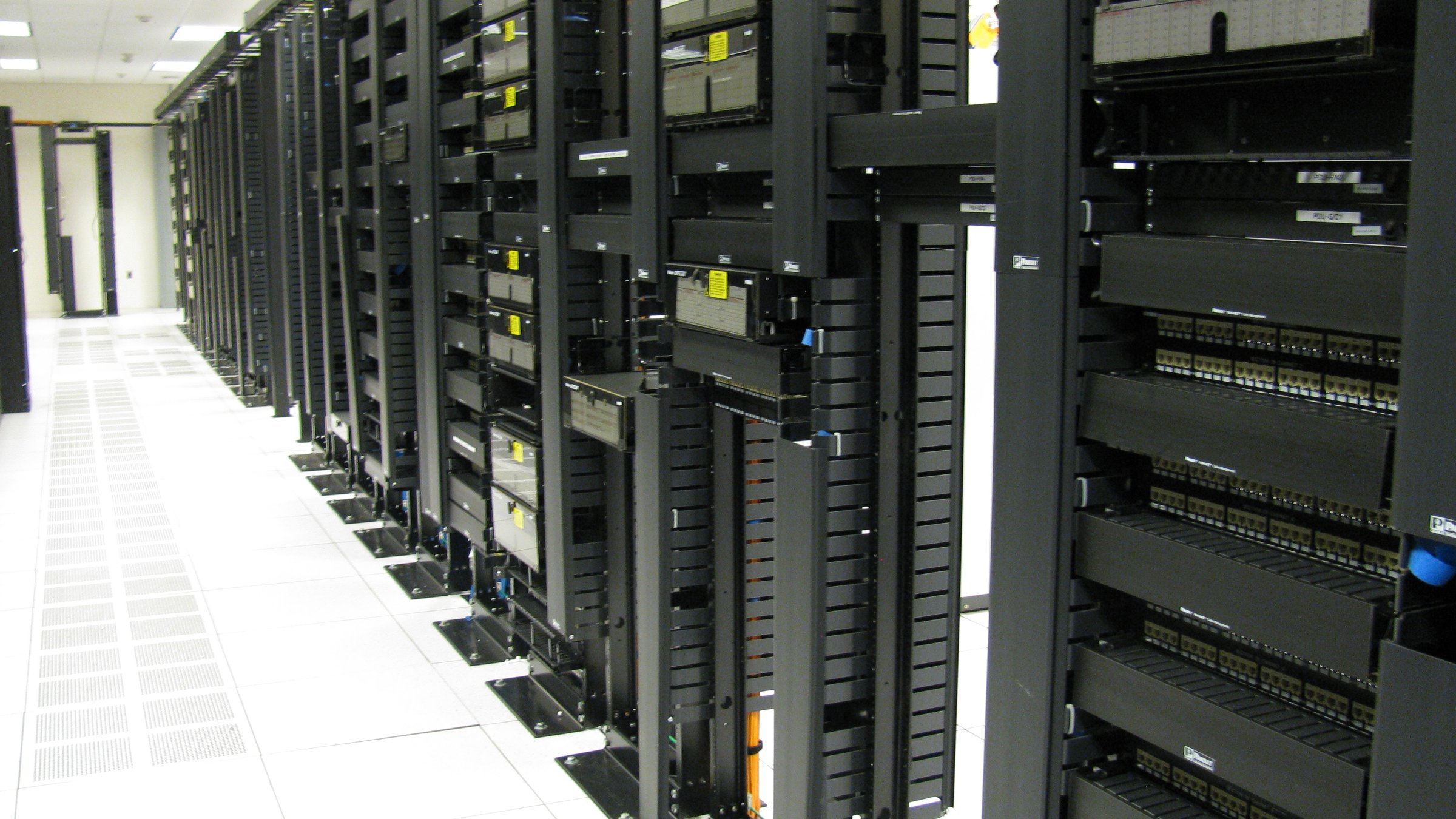
The move extends the cloud push at Oracle, the company founded by Larry Ellison, its executive chairman and chief technology officer. Under the arrangement, OCI will provide the power, cooling and data-center networking to deploy the TPUs inside its own infrastructure, according to the release.
What’s driving it
Oracle is pitching choice. “Different AI workloads have different compute needs,” Mahesh Thiagarajan, president of Oracle Cloud Infrastructure, said in the release. Amin Vahdat, Google’s senior vice president and chief technologist for AI and infrastructure, said in the same release that “the next generation of AI will require a diverse range of compute.”
The chips are Google’s eighth generation, which comes in two versions: TPU 8t for training and TPU 8i for inference. Google says TPU 8t delivers nearly three times the compute per pod of the previous generation, according to the release. In a Google Cloud blog post, Batta and Gurmeet Goindi, a Google senior director of product management, wrote that the eighth-generation chips deliver up to 12.6 petaflops of native FP4 compute per chip, at up to twice the performance per watt of the prior generation. They also wrote that global demand for AI compute “exceeds any single cloud provider’s footprint.”
Why it matters
For Oracle, the deal adds a second major accelerator family to a cloud that, as AI Early Edition reported Tuesday, just made Nvidia’s Vera Rubin racks generally available. Batta’s post lists AMD, Intel, SambaNova, Cerebras and OpenAI’s inference chips developed with Broadcom as further options, and he calls that flexibility “fungibility.” Oracle is betting that customers will pay for an accelerator mix rather than a single supplier. Google has spent more than a decade building TPUs and has rented them out from its own cloud, so hosting them in Oracle’s data centers also gives customers who rent AI compute another alternative to Nvidia hardware without moving to Google Cloud. The timing limits the near-term effect: nothing ships until 2027, and Oracle says the ramp runs over several years. Until then, the deal shows where Oracle wants its compute mix to go more than what customers can rent today.
Who has a stake
Oracle is adding capacity quickly. Batta wrote that OCI’s cloud infrastructure revenue reached $7.4 billion in the first quarter of fiscal 2027, up 121% from a year earlier, and that Oracle added 850 megawatts of data-center capacity in the quarter. Google gains a new outlet for its chips, and the Google post says the open-source TorchTPU software stack lets developers move PyTorch models onto TPUs without rewriting them. Nvidia, AMD and Intel all remain suppliers to OCI, according to Batta’s post.
What’s next
Oracle and Google said TPU capacity on OCI will come online in calendar 2027 and grow over several years. Oracle said in Batta’s post that it also plans to bring Cerebras wafer-scale inference systems to OCI in 2027.
Edition Oct. 28, 2026 · Archive shelf