Microsoft set to close $25 billion bond sale as AI spending climbs
Microsoft’s prospectus shows $25 billion of notes in 10 parts paying up to 6.35%, due to settle Nov. 4, for uses that may include capital spending.
Share
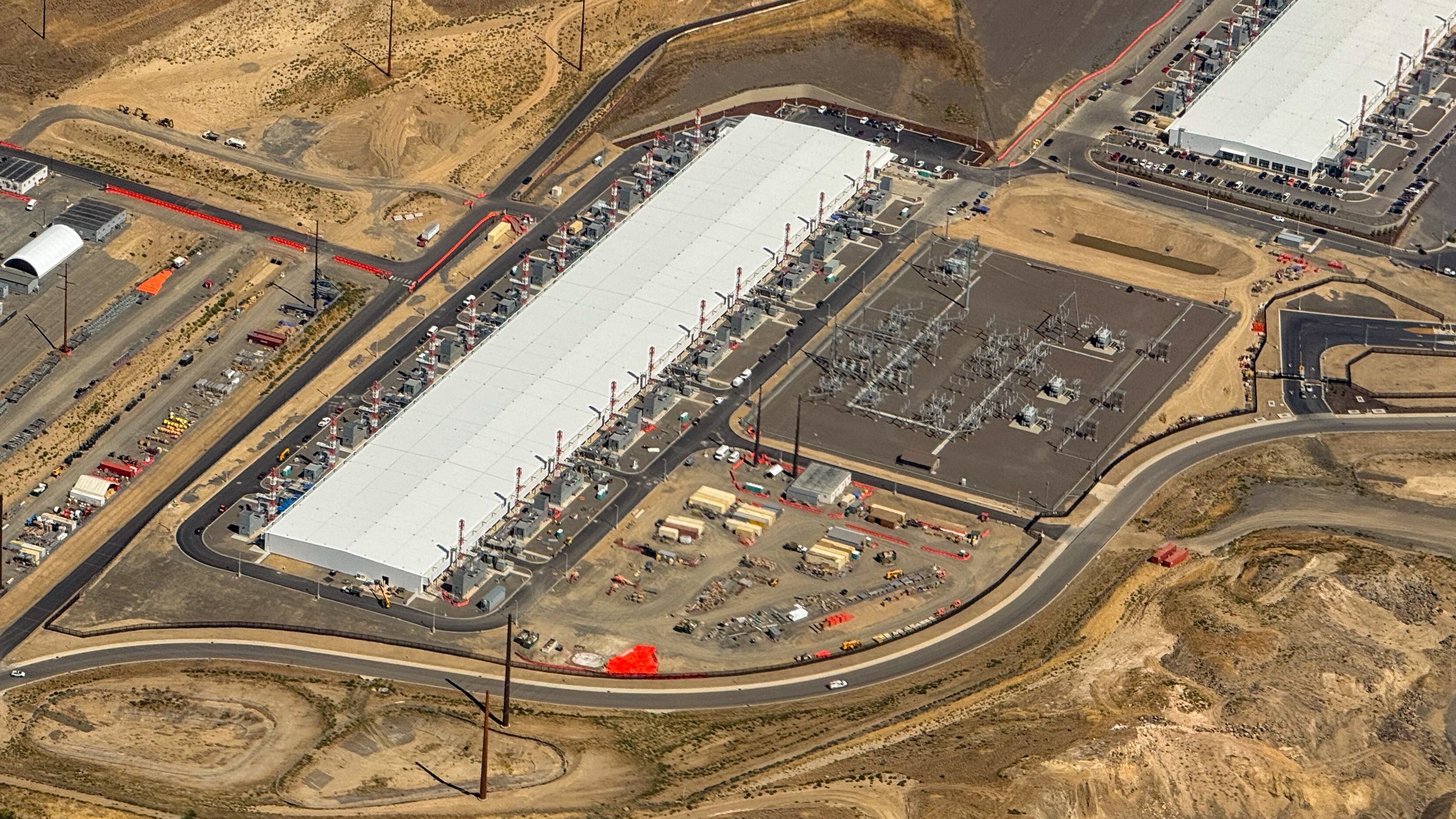
Microsoft is set to close a $25 billion bond sale Wednesday, its first new note offering registered with the Securities and Exchange Commission since early 2017, filings show. The company sold 10 sets of notes, due from 2028 to 2066, as it spends heavily on the chips and data centers behind its AI business.
The notes priced Oct. 29 and are to be delivered to investors “on or about November 4,” according to Microsoft’s prospectus supplement. The filing does not say the money is for AI.
The terms
Eight parts pay fixed rates. They run from 4.85% on $2 billion due in 2028 to 6.35% on $2 billion due in 2066. The biggest pieces are $4 billion due in 2036 at 5.55% and $4 billion due in 2056 at 6.25%. The other fixed parts are $3.25 billion due in 2029 at 5%, $3.25 billion due in 2031 at 5.2%, $2.5 billion due in 2033 at 5.35% and $2 billion due in 2046 at 6.15%.
Two $1 billion parts float. They pay the Secured Overnight Financing Rate, a benchmark for overnight loans, plus 0.35 percentage point for 2028 notes and 0.53 point for 2029 notes.
Investors paid 99.624% to 100% of face value. After underwriting fees, Microsoft gets about $24.9 billion before expenses, by the filing’s figures. J.P. Morgan, UBS Investment Bank and Wells Fargo Securities top a list of 11 lead banks.
The filing says the money “will be used for general corporate purposes, which may include, among other things, funding for working capital, capital expenditures, repurchases of our capital stock, acquisitions and repayment of our existing debt.” The sale lifts Microsoft’s total debt to about $60.4 billion from $35.5 billion at Sept. 30, the filing shows.
The spending
Microsoft spent $45.2 billion on capital projects in its quarter ended Sept. 30, including $7.4 billion in finance leases, Amy Hood, its chief financial officer, said on the Oct. 28 earnings call. Cash paid for property and equipment was $39.4 billion, about double the $19.4 billion of a year earlier, the company’s earnings release shows.
Hood said roughly three-quarters went to short-lived gear, mainly processors, for customers to “build and scale AI applications.” She said spending this quarter will top $50 billion and should total about $170 billion for the calendar year.
Microsoft also generated $58 billion in operating cash in the quarter and returned $10.2 billion to shareholders. It ended September with $64.5 billion in cash and short-term investments.
“To complement cash generated by the business and preserve financial flexibility, we will access additional sources of funding when we believe it is attractive to do so,” Hood said on the call. Satya Nadella, chairman and chief executive, said he has “never been more confident in the long-term returns on our investments.”
Our read: A company with $64.5 billion in cash borrowing $25 billion is not a sign of distress. It is a sign of scale. Free cash flow was $18.6 billion last quarter, Hood said, against capital spending of $45.2 billion, and she expects that spending to climb. Debt lets Microsoft keep building without drawing down cash or slowing buybacks and dividends. The price is real, though. Even one of the strongest borrowers is paying 4.85% to 6.35% on its fixed notes. Microsoft is locking in that cost for as long as 40 years against hardware it says is mostly short-lived. That mismatch is worth watching. The bet only pays if AI demand holds long enough to earn back the chips before they age out. The filing is careful not to promise where the money goes. Investors should judge the deal by what Microsoft reports on returns, not by its confidence.
Also today
The New York Times and three other papers sue Brave, alleging it scraped the web for AI. Voters in five Ohio towns backed data center charter amendments. OpenAI says it rebuilt its Git backend to keep up with coding agents. Salesforce agrees to buy Cresta for voice agents. OpenAI says its Georgia campus can cut up to 1,000 megawatts of power use.
What’s next
The notes are due to settle Wednesday. Microsoft’s next quarterly update will show whether spending tops $50 billion, as Hood forecast.
Sources: Microsoft prospectus supplement (SEC), Microsoft earnings release, Microsoft earnings call
Edition Nov. 4, 2026 · Archive shelf