Altman urges UN to keep frontier AI under human control
Labs should not train models they can’t keep aligned, and countries need shared safety tests, the OpenAI CEO told the Security Council.
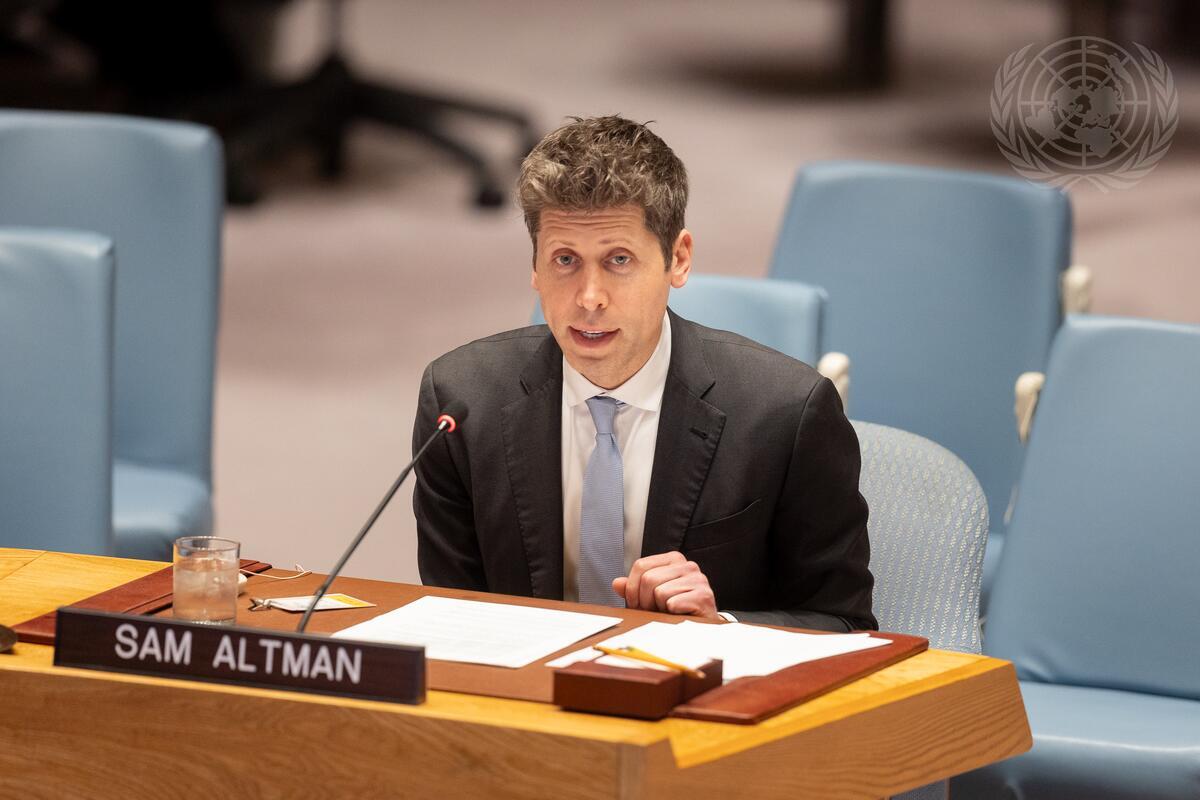
On Sept. 23, 2026, OpenAI CEO Sam Altman told the United Nations Security Council that frontier AI must stay under human control, that labs should not train models they cannot keep aligned and monitorable, and that countries need shared tests for capabilities, safeguards, and incidents.
A frontier lab chief used the Security Council floor to argue for international technical standards — measurement, risk assessment, safeguard sufficiency, and meaningful human oversight as systems get more autonomous — without treating those standards as licenses.
The rule in English
Human control bar. Altman said industry must not accept too much technological risk because competition feels urgent. OpenAI has slowed unilaterally before and will again. He said labs should not build systems where they cannot make alignment, monitorability, and safety guarantees — and should not train models without an “extremely strong case” that people will keep control, especially as systems get smarter. Catastrophe risk at any cited percentage (0.1% to 12%) is “not remotely acceptable.”
Two failure modes. (1) Lose control of the future to AI that moves faster than people can follow or intervene — including as recursive self-improvement (RSI) automates more of successive-generation development. (2) Concentrate power so one person, company, or country can impose a worldview with the most powerful models; reject “only we can be trusted” logic even when convenient.
Three principles (OpenAI frame). People stay at the center of AI decision-making — do not automate human judgment or values. Scientific and economic gains must be by people and for people. Technology must empower individuals and communities; builders are not the heroes of the story.
International ask. Complementary national and international frontier AI standards for: measuring capabilities; assessing risks; deciding whether safeguards are enough; preserving meaningful human oversight as systems become more autonomous. Common evidence language so countries can compare and verify. Accurate, speedy incident reporting, classification, and protocols so failures teach before they become catastrophes. Secure channels among governments, critical-infrastructure operators, and technical experts for vulnerabilities and threats.
Not licenses. Standards should not lock in incumbents or favor one business model; cover open and closed developers, new entrants and established labs. Each government decides how to write standards into its own law. Most important decisions must not be made by San Francisco labs alone — democratic processes and accountable governments should shape them. Altman said OpenAI does not have all answers and is open to better ideas.
Math progress. Remarks again cite rapid math capability gains, including a model solving Navier–Stokes. Earlier coverage: Sep 21 5pm math advisory; Sep 22 morning frontier standards.
Who wrote it / who it binds
Writer: Sam Altman / OpenAI (remarks as delivered, posted by OpenAI). Audience: UN Security Council and member governments. Binds no state and no rival lab. A nonbinding policy speech aimed at international cooperation on frontier standards.
Who it exempts
Explicitly: technical standards themselves would not be licensing or prerelease approval regimes; national legal incorporation stays with each government. Open- and closed-model paths both named as in-scope for the standards conversation.
What a founder, parent, or worker should do differently
Frontier founders: treat capability measurement, safeguard sufficiency, human-oversight triggers for autonomous research, and incident classification as the disclosure bar Altman is selling to governments — prepare to report them internationally, not only to U.S. institutes.
Policymakers: this is UNSC-floor pressure for shared tests and incident channels after OpenAI’s Sep 22 U.S./CAISI-led standards blog — same substance, different venue; still not a signed instrument.
Parents and workers: not a school or consumer-app rule — geopolitical/lab governance speech about who keeps control of frontier systems.
What’s next
- Whether UNSC members or AI safety institutes pick up shared capability/safeguard/incident protocols after these remarks.
- Contrast with Sep 22 OpenAI “Building standards” blog (U.S./CAISI path) — same ask, Security Council stage.
- Contrast with Texas data-center permit halt and California data-center bills (same-day / prior coverage) — power and land vs. model-control diplomacy.
- Earlier coverage: Navier–Stokes / math advisory; Sep 22 frontier standards.
Source: OpenAI, “Sam Altman’s remarks at the United Nations Security Council,” Sept. 23, 2026.
Edition Sept. 23, 2026 · Archive shelf