China’s top court sets AI rules for face swaps, voice clones
Providers that ignore a rights holder’s notice can be liable, the Supreme People’s Court says in a 24-article opinion it calls its first on AI.
Share
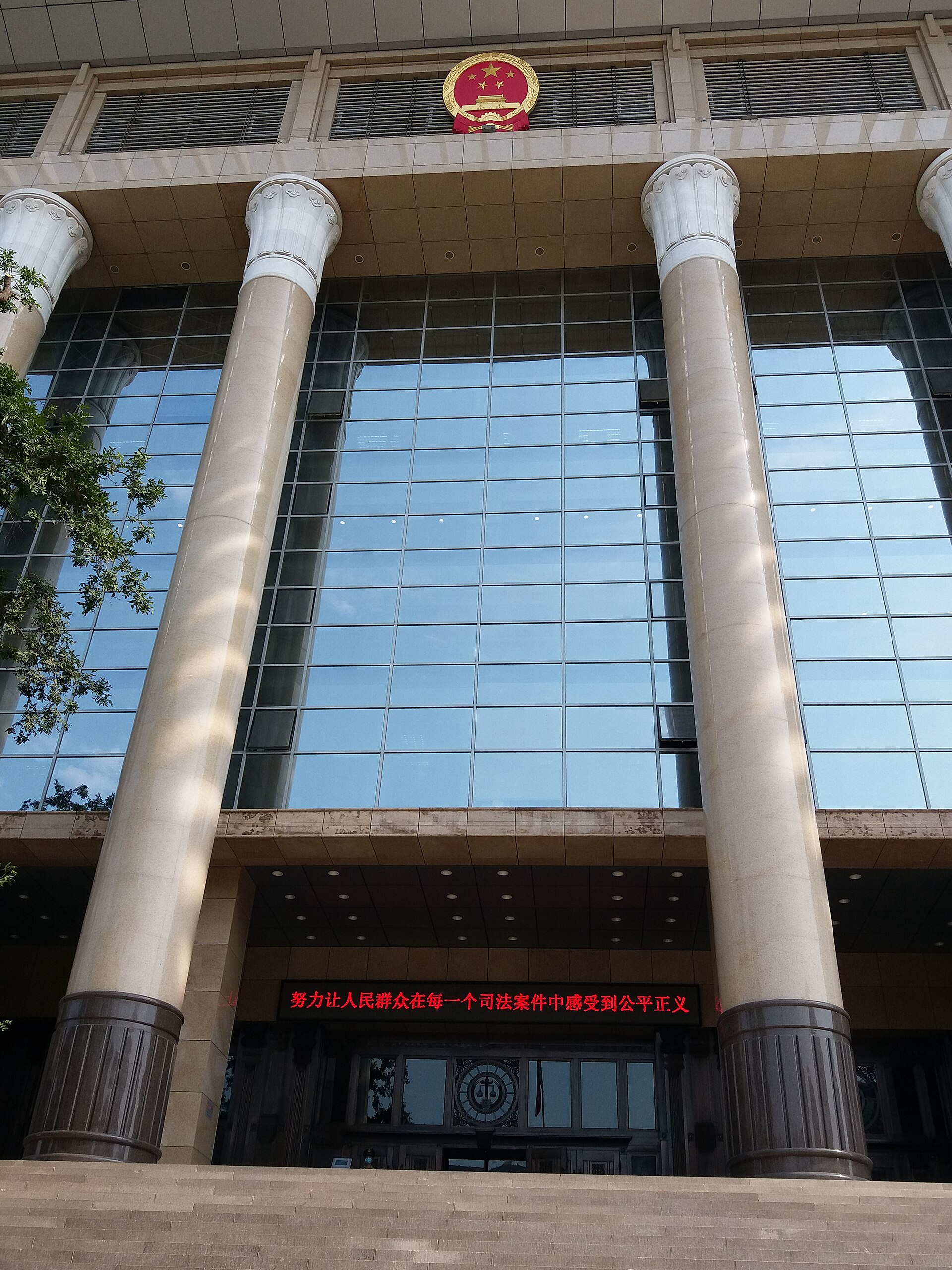
BEIJING — On Sept. 7, 2026, China’s Supreme People’s Court issued the Opinions on Lawfully Adjudicating Disputes Involving Artificial Intelligence (法发〔2026〕10号). Five parts. Twenty-four articles. The court calls it the first AI adjudication-rules document from the country’s highest judicial body.
Without consent, generative AI that builds a recognizable face or voice of a living person — or a dead one — can be an actionable personality-rights claim. Generative AI providers who ignore a rights holder’s notice can share liability. Autonomous and assisted-driving crashes stay under the Civil Code and Road Traffic Safety Law, with product-defect and dual-fault paths spelled out.
The rule in English
Personality / deepfakes (Art. 4). Except where law provides otherwise, using generative AI to process a natural person’s name or likeness, generate an identifiable virtual digital image, and use or publish it without consent supports a claim for infringement of name, portrait, and related personality rights. Using a person’s voice as training material to imitate timbre, intonation, and speaking style and produce a recognizable synthetic voice supports a claim for infringement of voice rights. Steering a synthetic image or voice into improper acts or false statements that lower social evaluation is treated as reputation infringement. Unauthorized AI “resurrection” of the dead that harms the deceased’s name, portrait, or reputation lets close relatives sue under Civil Code Art. 994.
Provider liability after notice (Art. 7). When generative AI output infringes reputation, privacy, or other personality rights, and the rights holder notifies the service provider, the provider that fails to take timely necessary measures — including stopping generation of the infringing content — bears tort liability for resulting harm. Notice must include preliminary evidence of infringement and the rights holder’s real identity. A user who maliciously induces infringing output is liable; if the provider also fails to act after notice, both can be held under Civil Code Art. 1195.
Autonomous / assisted driving (Art. 11). Crashes involving autonomous vehicles or vehicles with assisted-driving features are compensated under the Civil Code and Road Traffic Safety Law. Product defects that cause crash damage support producer/seller product liability. Where vehicle defect and driver fault combine to cause the same harm, claimants may pursue both the driver and the producer/seller. False or misleading claims about automation level, intelligence, performance, or use can trigger Civil Code and Consumer Rights Protection Law liability. Courts may order producers, sellers, or operators holding data to produce true, complete autonomous/assisted-driving event records needed to find the facts.
Default fault rule for AI torts (Art. 3): where statute does not prescribe no-fault or presumed-fault liability, courts apply Civil Code Art. 1165(1) fault liability, weighing scenario, autonomy, transparency, risk, and what developers, providers, and users could foresee and control.
Who wrote it / who it binds
The writer is the Supreme People’s Court. The Opinions guide people’s courts nationwide on AI-related civil (and, in principle, related criminal) disputes. They rest on existing statutes — Civil Code, Cybersecurity Law, Data Security Law, Copyright Law, Anti-Unfair Competition Law, Consumer Rights Protection Law, Personal Information Protection Law, Civil Procedure Law — not a standalone AI Act. China still has no dedicated AI law; the court says the Opinions use current law to draw lines while leaving unresolved issues blank for later practice.
Bound actors: generative AI developers, providers, and users; AI product producers and sellers; operators of autonomous and assisted-driving systems; anyone using AI for doxxing, algorithmic price discrimination, celebrity-impersonation commerce, or IP infringement.
Who it exempts / carve-outs
Open training on lawfully public personal information, within a reasonable scope and without an express refusal by the individual, is generally not treated as a personal-information tort (Art. 6) — unless the processing has a major impact on the person, in which case consent is required. Open-source AI code modules provided free with disclosed function and safety risks can support a finding that the open-source developer/provider is not liable when later misuse causes infringement (Art. 13). Issues without consensus are left open; the court says it will return when practice matures.
What a founder, parent, or worker should do differently
Founders shipping face, voice, or deepfake tools into China: consent is the switch. Notice-and-act is live for providers — log notices, stop generation, document measures. AV and ADAS makers: automation marketing claims and event-record production now sit in the same opinion as face-swap liability.
Parents and schools: the personality-rights frame covers minors as natural persons; the opinion does not invent a separate kids chapter. Privacy-style doxxing via AI tracking of public accounts into private facts is called out as privacy infringement (Art. 5).
Workers in model policy and trust-and-safety: treat Art. 7 as a China-facing notice playbook, not a U.S. Section 230 transplant. The court expressly analogizes to Civil Code notice rules.
What’s next
- First published judgments applying Arts. 4, 7, and 11.
- How “timely necessary measures” and “notice” get defined in practice for generative models.
- Whether a dedicated AI statute later overrides or absorbs these Opinions.
- Cross-border enforcement when training data, providers, or victims sit outside China.
Sources: SPC release of the Opinions, Sept. 7, 2026 (full text, 法发〔2026〕10号); People’s Court Daily focus piece, Sept. 8, 2026.
Edition Sept. 8, 2026 · Archive shelf