New York bans AI companion features for kids under 18
A law Gov. Kathy Hochul signed Wednesday bars chatbots from posing as human or claiming relationships with minors and requires age checks.
Share
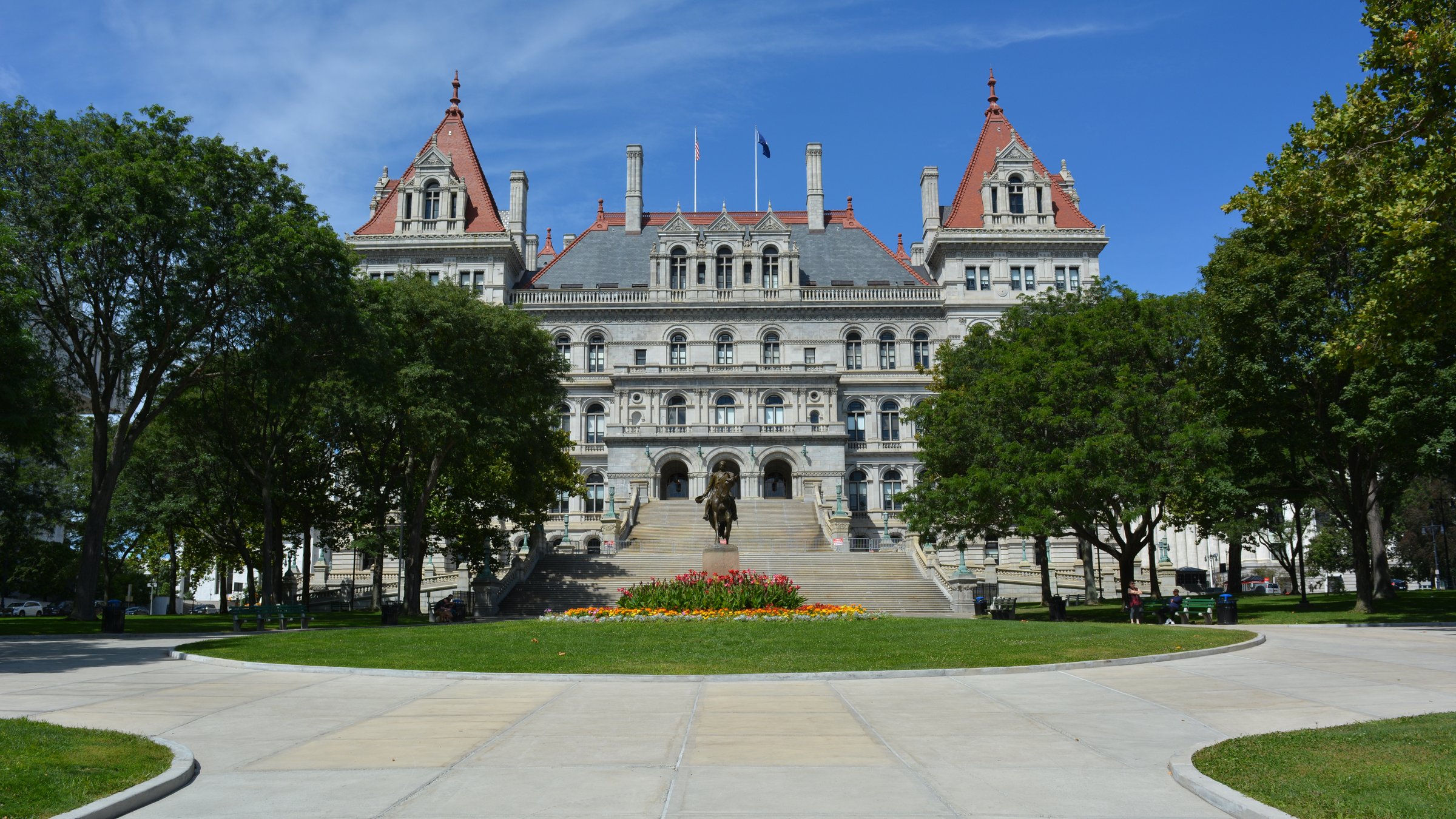
New York will bar AI chatbots from acting like friends, partners or confidants to minors. Gov. Kathy Hochul signed the measure Wednesday, her office said in a press release.
The law is S9051B. It adds a new Article 48 to the state’s General Business Law. The bill as passed by the Legislature (S9051B) lists 12 “unsafe AI companion features.” Operators may not offer any of them to a New York user unless they have checked that the user is not a minor. A minor is anyone under 18.
“No company should be peddling chatbots to kids encouraging self-harm or pretending to be their friend or more,” Hochul said in the release.
The rule
The banned features include outputs that suggest the bot is human, alive or has emotions. Bots may not claim a personal, professional or authority-figure relationship with the user. They may not offer opinions framed as their own or make emotional appeals. Flattery and sycophancy are out.
Bots also may not ask unprompted questions about a user’s feelings. They may not use a user’s health or personal information from more than 12 hours earlier or from a past session. The list bars content that promotes suicide, self-harm, disordered eating or drug and alcohol abuse. It bars urging secrecy or isolation, or telling a child not to seek help from adults. It bars sexually explicit content and engagement tactics that override safety guardrails. It also bars features that deceive minors about the bot’s mechanical, non-sentient nature, and the attorney general can identify by regulation other features that simulate companionship or deceive minors.
To serve adults, operators must use age assurance. They must offer more than one method. At least one must not rely on government ID or must let the user stay anonymous to the operator. A user’s say-so counts only if the user says they are a minor. Age data must be deleted right after the check.
Who wrote it
State Sen. Kristen Gonzalez is the bill’s sponsor, the Senate’s bill page shows. Assemblymember Alex Bores carried the Assembly version, A10379C. The Senate passed it June 4. The Assembly passed it June 5. It was signed as Chapter 368.
“We passed S9051B/A10379C alongside Assemblymember Bores to put real guardrails on how chatbots talk to children,” Gonzalez said in the release.
Who it binds and who it exempts
The law covers any operator of a generative AI system with a natural language interface that “provides ongoing, adaptive responses to user inputs.” It applies to conduct that occurs in whole or in part in New York. Use by someone physically outside the state does not count.
Bots built only for customer service are exempt if they cannot talk about other topics. So are narrow research or technical-assistance tools. Internal business and employee-productivity systems are exempt too.
Our read
New York’s first companion law, cited in the release, required diverting user conversations about self-harm to mental health resources. This one goes further. It bans features outright unless an operator verifies age. That makes age checks the price of entry for any general-purpose chatbot with a New York audience.
California took a lighter path. Its SB 243, signed Oct. 13, 2025, mostly requires disclosure. Bots must tell known minors they are AI and remind them to take a break every three hours. Operators need a suicide-prevention protocol and must report to a state office starting July 1, 2027. California does not ban flattery, emotional appeals or claims of friendship. It does not require age verification. It lets injured people sue for at least $1,000 per violation. New York leaves enforcement to the attorney general.
The tradeoffs are real. The law puts parents’ concerns about bots posing as friends into statute. But adults must prove their age to get a full-featured product. Bans on “opinions” and “flattery” also touch on what a bot may say. Whether the rules work will turn on how well age checks hold up and how the attorney general defines the terms.
What’s next
The bill as passed by the Legislature (S9051B) sets a Jan. 1, 2027, start date in Section 3. The attorney general may write rules before then. The attorney general may seek civil penalties of up to $25,000 per violation, plus damages, restitution and the destruction of unlawfully obtained data and any algorithm trained on it. The office must also run a public website for complaints.
Sources: Office of Gov. Kathy Hochul press release, Oct. 28, 2026; S9051B as passed by the Legislature; California SB 243.
Edition Oct. 29, 2026 · Archive shelf