Google limits Gemini 4 Carbon to cyber defenders at first
Google says its new frontier model leads on vulnerability tests and will go to a subset of cyber defenders this week before a wider rollout.
Share
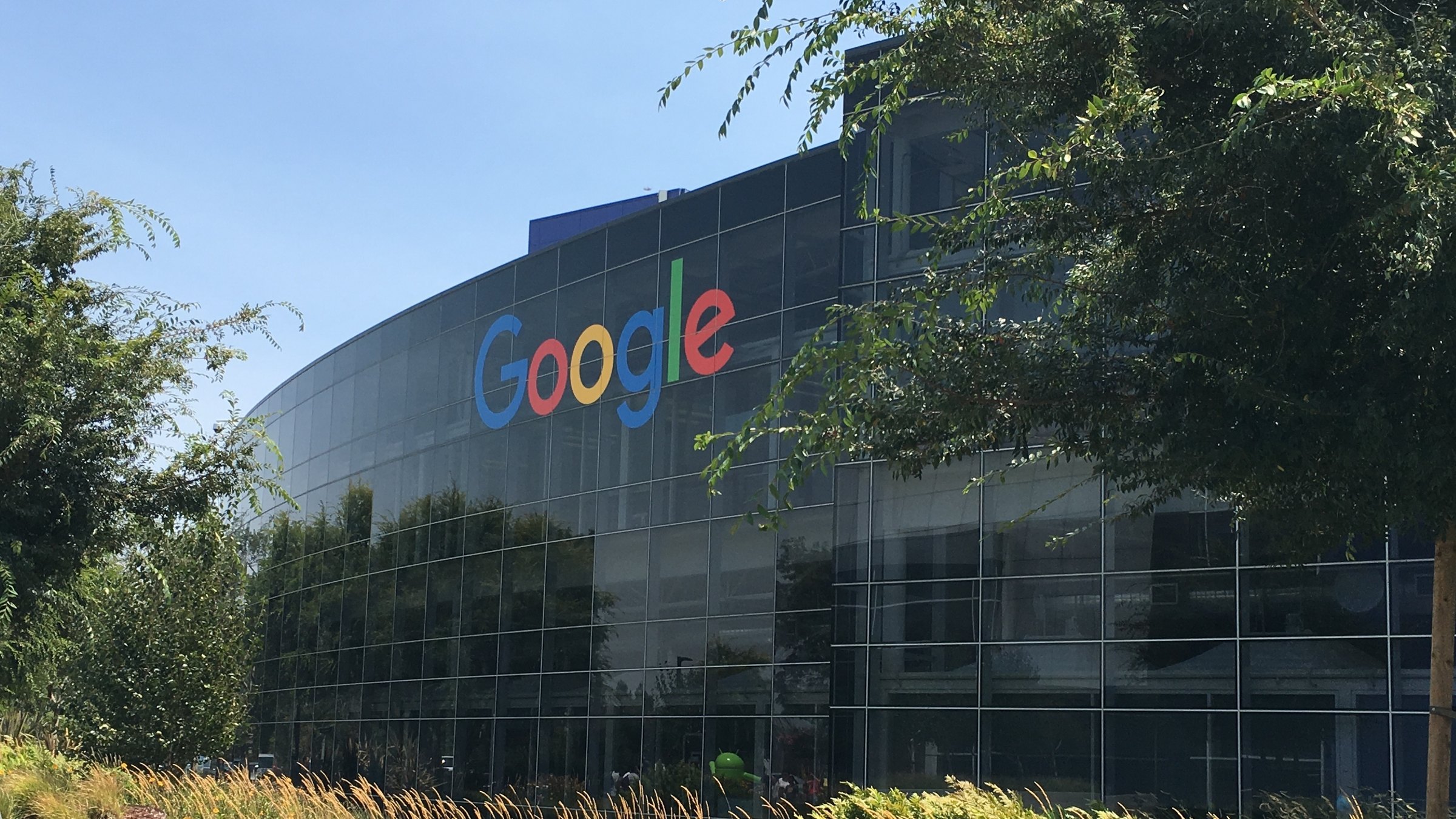
Google on Oct. 28 announced Gemini 4 Carbon, which it called “our strongest model with state-of-the-art cybersecurity and long horizon capabilities.” The Mountain View, Calif.-based company is not opening the model to everyone. “Starting this week, we will make Carbon available to a subset of cyber defenders and will gradually phase access to additional trusted partners through our Fairwind Program,” Google said.
The announcement was posted by Koray Kavukcuoglu, SVP, Google DeepMind and Chief AI Architect, Google. Google said it is “taking a deliberate approach to rollout” and is “actively engaged in the U.S. government’s voluntary process for pre-release model testing.” The company said it is “continuing to gather feedback and iterate on guardrails before making Carbon available to developers, businesses, and consumers via our product surfaces as soon as possible.”
The scores: Carbon ranks No. 1 at 59 on version 5.0 of the Artificial Analysis Intelligence Index, a third-party ranking, according to Google. On cybersecurity benchmarks that Google said were evaluated without guardrails, the company reported 88.2% on SEC-bench Pro for finding vulnerabilities, 54.8% on ExploitGym for exploitation and 71.0% on Collinear’s CWE-bench for patching. Google said Carbon “jumps +89 elo points to land at #4 (1768) on WebDev Arena.”
Inside Google: On internal benchmarks, Carbon achieves “more than 2x uplift in success rate for generating secure code over Argon,” Google said, referring to Gemini 4 Argon, which it launched two weeks ago. Google said its Chrome team reported that Carbon “performed more than 10X better than another lab’s large frontier model when generating high quality patches.” Wiz, which Google called its leading Cloud security platform, “also observes Carbon leading on benchmarks for web penetration testing,” the company said. Google said its teams have seen Carbon “run for days” on multi-step engineering tasks such as root-causing and patching subtle bugs across large codebases.
Safety claims: Google said Carbon cut successful cheating on Terminal-Bench 4.0 to 0.0%, with cheating attempts at 0.4%. In live coding with internal teams, high-severity misalignment alerts “dropped by almost 80%,” Google said. The company reported that Carbon reduced overreach by 26% and under-service by 29%, and that it reached a 0.0% attack success rate on Gray Swan’s Indirect Prompt Injection Benchmark, compared with 0.7% for Argon.
Price: Google said Carbon will launch at the same introductory price as Argon: $2 per million input tokens and $10 per million output tokens, with cached input tokens 95% off the input price. After the introductory period, Google said, the price will be $4 per million input tokens and $20 per million output tokens.
Why it matters: Google is pairing its strongest claimed cyber scores with its narrowest initial audience. The same capabilities Google highlights, finding vulnerabilities, checking which ones are exploitable and writing patches, are going first to a subset of cyber defenders and to partners admitted through the Fairwind Program, while the developers, businesses and consumers Google names wait for what it calls a “deliberate approach to rollout.” The company has also published a full price schedule for a model most customers cannot yet use, so the access terms, not the price, are the gate. Nearly every number in the announcement comes from Google, including its internal benchmarks and an unnamed rival comparison from its Chrome team; even the third-party rankings and external benchmarks it cites are scores Google reported. How widely and how quickly the Fairwind Program admits partners will show how the company weighs those cyber capabilities against wider release.
Google’s DeepMind unit this week also unveiled Genie 4, a world model that adds sound.
Edition Oct. 28, 2026 · Archive shelf