OpenAI says its AI produced three math and physics results
The company says its AI proved the local smoothing conjecture and disproved a key computer science hypothesis, and outside experts will now check the work.
Share
6 sources
- OpenAI — Building scientific understanding with academic communities (Oct. 26, 2026)
- OpenAI math repository — release history (GitHub)
- Local smoothing for the Euclidean wave equation (AI-written preprint, PDF)
- Lean formalization, local smoothing (GitHub)
- The Exponential Time Hypothesis is False (AI-written preprint, PDF)
- Lean formalization, ETH (GitHub)
OpenAI on Monday announced what it called three new discoveries in mathematics, computer science and physics, all produced by its internal models. The company said it has asked outside experts to act as shepherds and organize groups to examine each result, and it called the AI-written manuscripts “a form of raw research data.”
The math claim: OpenAI said its models produced a proof in every dimension of Sogge’s local smoothing conjecture, first proposed in 1991. The conjecture concerns how waves behave as they focus, and it implies the Kakeya conjecture and Stein’s restriction conjecture, so OpenAI said the proof resolves those in all dimensions as well. The company said it got the AI output on Oct. 18 and formalized it in Lean, a proof-checking language, the next day. It posted the AI-written paper and its Lean formalization on GitHub. The repository’s own release notes describe the restriction result more narrowly, as holding “throughout the interior of the conjectured range.”
The computer science claim: OpenAI said its system proved that the Exponential Time Hypothesis, a widely believed conjecture about how hard it is to solve Boolean satisfiability problems, is false. The post says the hypothesis has been used in hundreds of papers. According to the paper, the result is a deterministic algorithm that counts satisfying assignments of fixed-width formulas in subexponential time. OpenAI said the AI found the disproof on Oct. 16 and it was formalized in Lean on Oct. 17, and it posted the Lean proof. A group led by Russell Impagliazzo and Ramamohan Paturi of UC San Diego and Ryan Williams of MIT will verify and shepherd the work. Impagliazzo and Paturi, with Francis Zane, first proposed the hypothesis. OpenAI said it agreed to the group’s requests to make all raw data public and to fund a conference on the result. The company added that turning the result into practical improvements “will require significant further research.”
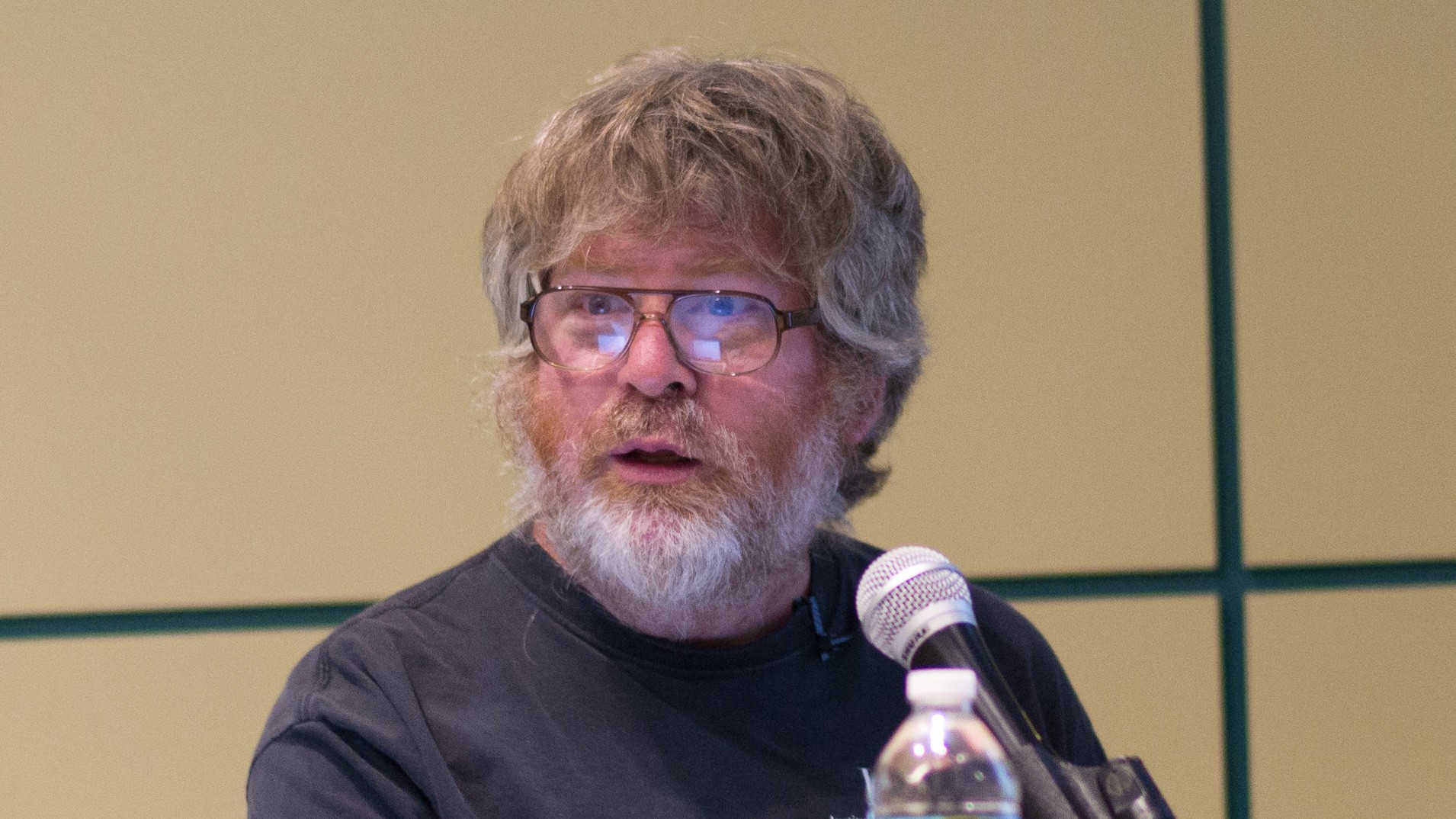
The physics claim: OpenAI said its models produced a mathematically rigorous existence proof for certain four-dimensional quantum field theories, including quantum chromodynamics, or QCD, and a unified completion of the Standard Model. A subproblem is the existence of pure Yang–Mills theory, part of a Clay Mathematics Institute Millennium Prize problem, the post says. OpenAI said the models produced the Yang–Mills proof on Sept. 9 and the QCD proof on Sept. 18, and it finished formalizing Yang–Mills existence in Lean on Oct. 16. Nobel laureate David Gross will lead a group with Michael Douglas, Arthur Jaffe, Igor Klebanov and Nikita Nekrasov to shepherd the work. That group has chosen not to release the AI artifacts yet and will write up the result itself, OpenAI said.
The ground rules: OpenAI said the collaborations follow four principles. Participants aren’t asked to sign nondisclosure agreements. OpenAI seeks no academic credit for the discoveries. The groups get recognition for what they write. Participation is voluntary and unpaid, and members don’t speak for OpenAI. The company said the work complements its previously announced $5 million contribution to the Simons Foundation for workshops and conferences on AI-produced results.
Why it matters: If any of these claims holds, it would be a significant result. Local smoothing implies the Kakeya and restriction conjectures. The Exponential Time Hypothesis underpins hundreds of hardness results. Yang–Mills existence is part of a Millennium Prize problem. But a Lean check confirms only that a proof matches the formal statement it was given. Whether that formal statement captures the famous conjecture is exactly what outside experts now have to examine, and OpenAI’s own repository words the restriction result more narrowly than the blog post does. The three results also differ in how much can be checked now. The math and computer science materials are public. The physics proofs are not, by the group’s choice. For now, these are OpenAI’s claims, and the named experts’ review is the real test.
What’s next: The computer science group has invited the community to help organize an open examination of the claim, and OpenAI said it will fund a conference on its implications. The physics group is writing up the result itself, and OpenAI said it will defer to that group on when the materials come out.
Edition Oct. 27, 2026 · Archive shelf