Google, XREAL open orders for first wired Android XR glasses
The $1,099 AURA glasses project apps into view while keeping the room visible, with Gemini built in and a cabled compute puck doing the heavy work.
Share
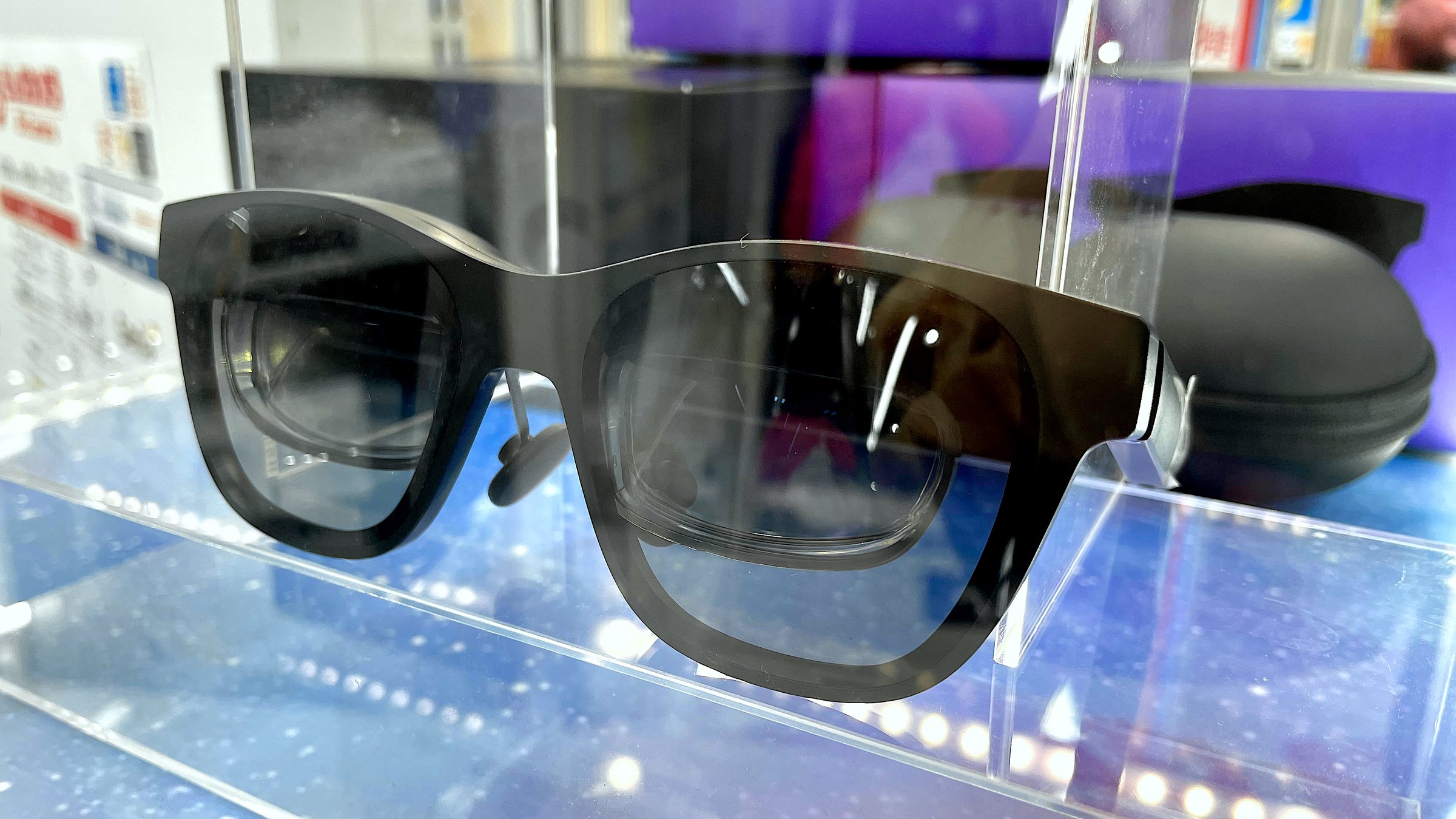
Google and XREAL on Wednesday opened orders for XREAL AURA, which Google calls “the first wired XR glasses powered by Android XR.” Orders are open in the U.S., Canada and Korea, and open Nov. 2 in Japan, wrote Shahram Izadi, Google’s vice president and general manager for XR. Launch pricing starts at $1,099 through the end of the year. XREAL’s U.S. shop lists a regular price of $1,279, and says shipping is expected to begin in mid-November on a rolling basis.
What it does: The lenses are transparent, so wearers see the room with their own eyes while apps are projected into a 70-degree field of view, Google says. The glasses weigh under 95 grams because the heavy processing happens in a cabled compute puck that holds the battery and Qualcomm’s new Snapdragon Reality Elite platform, which debuts on AURA. Wearers can arrange several apps around them, pair a Bluetooth keyboard and mouse or use the puck as a trackpad. A feature Google calls Wired Mirroring puts a laptop’s screen in a resizable window over a USB-C cable that supports video output, with no software to install. The lenses can dim for movies.
The specs: XREAL’s page lists Sony Micro-OLED displays at 1920 by 1200 pixels per eye, up to 120Hz, and a puck weighing 265 grams with a 4,455 mAh battery. It lists two memory and storage configurations, 12GB/256GB and 16GB/512GB. The frame carries two tracking cameras and a high-resolution camera with a privacy LED.
Gemini in view: Google says Gemini on Android XR “understands what you’re seeing and doing, both in the real world and on your screens.” Starting Oct. 28, a wearer can share their view and Gemini can highlight what to focus on, in the room or on screen. Android XR brings Google Play, including more than 150 apps made for XR, Google says.
Who can buy it: AURA is for users 18 and older, with a compatible account and setup required. In the U.S., it’s sold at xreal.com and BestBuy.com. Google points businesses to its Android Enterprise blog for larger deployments.
Our read: AURA is a bet that people will wear a cable to a pocket computer in exchange for lighter glasses and more processing power, rather than glasses that pack the computer and battery into the frame. That trade suits a seated user, on a plane, at a hotel desk or on a couch, and Google’s own examples are mostly those. At $1,099 for launch pricing, it competes less with a phone than with a portable monitor, and Wired Mirroring is the feature that makes that case for laptop workers. It is not an all-day, walk-around device on Google’s description. Gemini’s ability to see what the wearer sees is the headline feature and the open question. A camera on the face that feeds an assistant raises privacy issues for people nearby, and the hardware answer XREAL lists is a privacy LED indicator on the camera.
What’s next: Japan orders open Nov. 2, and Google says a spatial gallery is coming to Google Photos this year.
Edition Oct. 30, 2026 · Archive shelf